Wednesday, 30 April 2014

What the Scientific Method is and why I believe in it. (Science)

It is fair to say that at some-point in your life you will have to believe something to be true; but what to we base that upon? 

How do we define what is real or what is the truth against those ideas which are false?

We really only have 2 ways we can decide what is true and what is false and that is by;


Or


I will now explain to you why the Scientific Method is something I personally believe in; and perhaps to convince you to change how you approach believing or not believing in a hypothesis.

The first stage of the Scientific Method is the part where a person makes up a hypothesis about a certain natural phenomenon.

It is important to understand that anybody can form a hypothesis about anything; you need no qualifications to form a hypothesis, and you need no evidence to tell people all about it.

Untested hypothesis are not legitimate hypothesis until the point they are tested.

The second part is testing; and to sum it up quite clearly I quote Richard Feynman –
“It doesn't matter how beautiful your theory is, it doesn't matter how smart you are. If it doesn't agree with experiment, it's wrong.”

So unfortunately if any of the information observed disagrees with your hypothesis I’m afraid it has to be scrapped or changed to agree with the evidence at hand.

However, If the evidence you have acquired does fit the hypothesis you had then fantastic your hypothesis is accepted as folk-lore!

OH WAIT; no it isn’t.

I’m afraid this isn’t how science works. If it was then we would have to put all our faith in the skills of one person or group conducting one set of experiments to prove one part of the hypothesis they have made.

We now go into something called peer-review.

Peer review is when your hypothesis and results are tested by other scientists who redo the same experiment you have, try new experiments and thoroughly try to disprove your theory.
This process is never finished and is in constant use with ALL THEORIES at ALL TIMES.

So if peer review is never surpassed by a hypothesis how do we end up knowing things about the world?
In science we know that “facts” are in fact “accepted theories”. Accepted theories are theories which support more evidence than any other theory related to the same topic which explains the same phenomenon. 

Some accepted theories are ahead of their rival theories by a long way – such as Evolution, and are hence referred to as factual. However some theories are so close to each other in terms of how much they explain that it is hard to differentiate between them for example M-theory (string) and Quantum loop gravity theory.

All accepted theories are constantly peer reviewed and scrutinized (after all disproving a theory is a large scientific achievement) – so all accepted theories must continue to provide answers to evidence provided by the peer review scientists.

This is a method which is rigorous and well thought out. It gives us a platform on which to base what is real and what is not by working with hypothesis.

I believe in the Scientific method more than Faith because the scientific method is based on observation, evidence and scrutiny whereas faith is defined as believing in things without evidence.

I personally see no reason not to believe in the Scientific Method in every circumstance.

However some people still deny or don’t understand the scientific method because it’s answers sometimes do not suit them, here are some examples of things people say and why they are not true.

·         Event A happened a long time ago and you were not there to observe it; therefore you do not know what happened.
o   Though we cannot be certain what happened in Event A we can try to find evidence using what remains of Event A to prove a hypothesis of what happened at Event A and then we can use the scientific method to find an accepted theory. Alternatively we could not investigate Event A, but then we cannot say anything about Event A at all.
·         E.g Evolution is “just a theory”
o   Yes, but it is the accepted theory; so to say Evolution is untrue you must find a new theory which explains more phenomena than evolution and then that will become the accepted theory. You'll get a Nobel prize probably.

Or my personal favourite;

·         I just “know” it’s not true
o   

Friday, 13 December 2013

Brief Apology

Sorry I haven't updated in a while peeps; been very busy at work and school!

Will update soon :)

Andrew

Tuesday, 1 October 2013

Researching other peoples thoughts on Time and Consciousness (Science/Philosophy)

This is a post thinking and reflecting on some of my earlier posts regarding time and consciousness whilst researching other peoples similar theories.

Consciousness

Integrated Information Theory looks like a very interesting concept after doing some extra reading.
IIT seems to focus on the fact that a consciousness can not only see and record a large amount of information but link it together meaningfully at the same time. It suggests that these links between pieces of information set whether we are conscious or not and that our level of consciousness can be calculated by a mathematical method to create a constant phi. This seems to touch and develop on ideas I have personally pondered upon here on my blog.
Sources of Interest regarding IIT;

Quantum noise, entanglement and chaos in the quantum field theory of mind/brain states
http://arxiv.org/pdf/q-bio/0309009v1.pdf - needs to be read; notes/thoughts may follow.

Research into Time specifically –

The original concept of time tends to be called “Newtonian Time” (named after Isaac Newton) ; this is based on the premise that Time is another dimension in the Universe along with the 3 dimensions of space. It also presumes that time is unchanging in its speed in comparison with any other external bodies acting upon it.
“Absolute, true and mathematical time, of itself, and from its own nature flows equably without regard to anything external, and by another name is called duration: relative, apparent and common time, is some sensible and external (whether accurate or unequable) measure of duration by the means of motion, which is commonly used instead of true time ...”
I found the highlighted part of that quote particularly interesting as it may explain my confusion with time as a 4th dimension; perhaps I have confused this so called “common time” with “true time”.
There are other ways of looking at time now. Since Albert Einstein showed the world Relativity and special relativity time was changed completely and now wasn’t thought of as a constant but as something relative to the speed of light. I’m not too familiar yet with special relativity and the warping of space-time but it is much less “absolute” that Newtonian time. Other scientists claim that Time is immeasurable as it is not a thing or event and a lot of philosophers have other views on what time is.

After reading about other people’s thoughts I feel that even though I need to try to understand time and consciousness more by learning about suggested theories in more detail (especially relativity); my ideas seem to touch on those thoughts others have had. However I probably need to attain a better level of understanding In the subject area until I start making full theories.

Maybe in time (Pun not intended :P) I will come back to writing a theory of time as it is something which has always fascinated me.


Thursday, 11 July 2013

A brief guide to the particles within the Standard Model (Science)

The standard model of the universe is concerned with the particles and forces within our universe and how they interact with each other – and how the forces are carried.

Initially Greek philosophers such as Democritus proposed that the world could have been made of tiny atoms which made up everything.

This was found to be true; but it wasn’t the end. Then using such experiments as Rutherfords gold scattering experiment we deduced that there are 3 types of particle within the Atom; Electrons, Protons and Neutrons.

Lately due to the recent steps forward in high-energy physics we have been able to detect even small particles. These particles are found within the protons and neutrons, or in other particles made in other interactions (or on there own).

“Quarks” are the smallest known particles known to us at the moment. Initially we started to know about the Up and Down quarks found in protons and neutrons; but after finding more particles and observing many more reactions at higher energies we found 2 heavier quarks “Charm” and “Strange”. These particles are much more massive than the up and down quarks; and this pattern is continued when we found the Top and Bottom quarks with the Top quark being more massive than a whole proton (which is amazing considering the top quark is a fundamental particle and the proton is made of 3 “uud”)

Leptons are also included within the standard model; the simplest lepton is an Electron and this also has a Electron Neutrino aswell. However heavier versions of the electron have been found to match the groups of quarks we found before. These are called Muon and Tau (they also have corresponding Neutrinos).

Gauge Bosons or force carriers are commonly known for carrying forces between molecules and are found in the stage between when a particle is turning into another particle. The 4 bosons are photons (electromagnetic), gluons (strong) and z & w bosons (Weak). These bosons as you can see match up with the forces we know in our universe.

But where is gravity? You may ask. Well unfortunately the standard model doesn’t account for gravity – it is one of it’s major flaws. However there are theory that we should find graviton particles which carry the force of gravity like the other bosons do.

The final thing I will mention is the Higgs Boson.
This is the most recent significant finding in physics and is extremely exciting. It proposes that the higgs boson is the particle which gives particles mass and opens up a whole new set of questions for us to ponder over and experiment on.

So that’s a basic overview of the standard model’s particles!

Have a great day :D 


p.s remember when you say more “massive” or more “energy” it means the same thing as E = mc^2 so a particle with more energy is heavier and vice versa.


Sunday, 31 March 2013

Diffraction and Ghost Electrons (Science)


When you usually think of a particle you may think of a solid object; a definite thing which you could measure the whereabouts of if you wanted if you knew enough information about the particle.
Unfortunately this classical physics view of the world is no longer thought of as “correct”. (I say unfortunately as it makes things more awkward; however I like a challenge so I would say it was more interesting)

To give you an extremely brief idea about what I’m saying I will postulate an example:

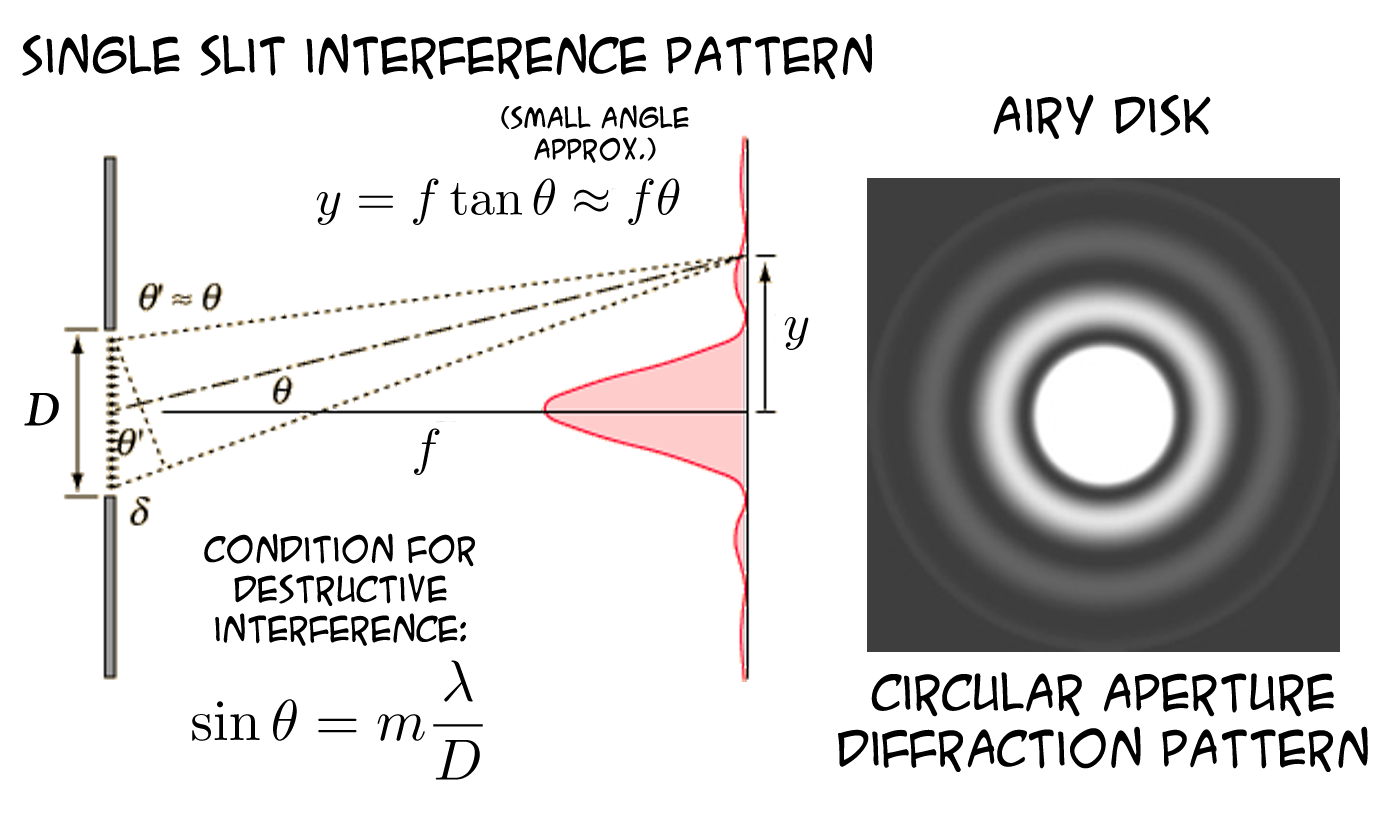
Say we take a beam of electrons and put it through a single slit diffraction experiment like so:


We get a diffraction pattern like this


We get this pattern because of electron wave-particle duality but that’s not important for the moment.


Lets make the experiment a little more complex lets say there are 2 slits after the single slit diffraction experiment (so a double slit diffraction experiment) A and B. Now when we fire the electron beam the electron can either go through A or B to hit the screen.


Now as we should we get an interference pattern similar to a wave when we conduct the experiment.

Here’s where it gets weird.

Imagine that there’s a detector at A and B. These detectors ascertain whether or not the electron passes through it or not.

When this is done in experiment the final interference pattern changes; we only get single slit diffraction interference pattern.

Why? We must assume that by measuring where the electron is we have made it so that it has to travel through 1 path; and the rest of the time it actually travels through A and B as 2 “Ghost” electrons. It travels every available path to the screen until it is detected and then all the ghost electrons “collapse” into one “real” electron.

Believe it or not; one single electron fired in the experiment will actually diffract with itself.

Happy Easter :D

Andrew

Thursday, 31 January 2013

Unification of time/ frame rate and consciousness (Science/Philosophy)

I have recently researched into time and consciousness in more detail see "Research into Time and consciousness"

I do understand that these ideas are probably not true; however they are ideas that I feel I should write down otherwise i shall forget or lose my thoughts/ideas.


Before you read this it would be advisable to read Thoughts about consciousness 1 and 2, and Time.

If you have read my thoughts on time it will occur to you that my ideas work on the principle that time as a physical quantity or dimension doesn't actually exist.

When we view the world we see a specific amount of “frames” per second. Our other senses view the world in a similar way, as our brains cannot process the information quicker than a certain “frame rate” (When I use the word “frame” it is just to more easily visualise the idea at hand).

If we said that we could see f frames in one second at the conscious state we are in at the moment then what would happen if we saw the world at f/2 frames per second.

After a little thought it occurred to me that time would effectively speed up if you moved from x frames to x/2 frames per second.

If you imagine that every function, electrical impulse or induced movement happened at half the speed your mind would work at half the speed as normal. This would in turn make the world seem twice as fast.

Lets take some individual time singularities; I will name them f; standing for frames.
If an object moves a certain distance in a certain number of frames then.

Vf = d/f

Vf = Velocity in frames
Vt = Velocity in time
d = Distance on metres
f = Frames passed
k = frame rate of eye per second

e.g if the object moves 12 metres in 10 frames

Vf = 12/10
Vf = 1.2 metres per frame

If we say k is the frame rate per second of the eye then.

Vt = d/ ( f/k )

Using the same example with k = 10

Vt = 12 / (10/10)
Vt = 12 m/s

This also means:
Vt = Vf*k
Vt = 1.2*10
Vt = 12 m/s

Proof that time travels faster if your frame rate is slower:

Vf = d/f
Divide frame rate by 2 but object distance moved stays the same.
Vf = d/f/2
Makes Metres travelled per frame double.
Vf = 2d/f

Therefore

2Vf =2d/f

And so even in seconds it will appear faster.

Vt = Vf*k

2Vt = 2Vf*k

Velocity in time twice as fast as original.

To be continued…..


Monday, 28 January 2013

The Illogical Fear of Death (Philosophy)


In our society the subject of death is usually surrounded with misery and sadness due to the loss of a life. This loss of life can understandably seem frightening.

However; it has struck me that if you think about death by natural causes or by an accident there is really very little to be scared of.

When we do die; if nothing else happens afterwards are we not truly at peace? No problems, no things to do, nothing.

Although this sounds like a fundamentally bad thing that nothing happens; I imagine it being incredibly peaceful.

Anyway; the point is if you are scared of death in the sense of passing into nothingness don’t be.

It is probably a much more painless and peaceful experience than you could ever perceive in your conscious mind at it is difficult to perceive being unconscious through a conscious mind.